Norfolk Broads
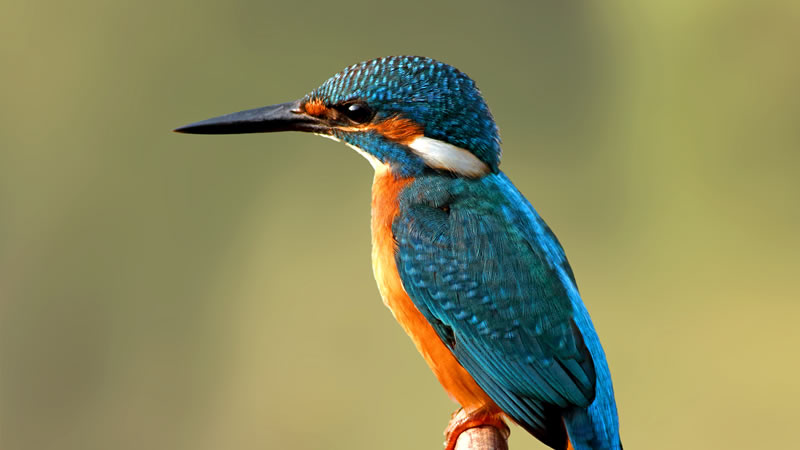
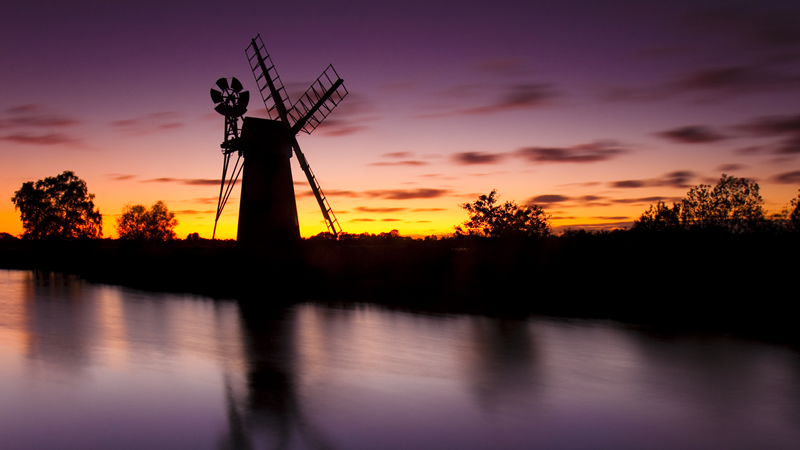
The Norfolk Broads consist of long meandering rivers, large expanses of water and smaller lakes and dykes, having been created by the flooding of ancient peat diggings. For much of the year the Norfolk Broads are popular with motor cruisers, sailing boats, kayaks and canoes, carrying people who want to experience the unique beauty and tranquillity of these breath-taking waterways. It is the perfect place to relax and unwind and offers some spectacular wildlife like the swallowtail butterfly, kingfisher, elusive bittern, otters, water voles and grass snakes.
Much of the Norfolk Broads can be explored on foot, with a number of visitor centres dotted around offering useful information, guided walks and refreshments. Some are free to enter, others charge a nominal fee. Many are managed by The Norfolk Wildlife Trust and their website offers very valuable information for those who are looking to explore the beautiful Norfolk Broads.
Exploring the Norfolk Broads by boat is popular and allows visitors to gain a unique viewpoint of the area. There are many different vessels available to hire, from canoes and kayaks and quiet electric boats and yachts to larger motor cruisers for longer holidays. There are numerous companies around Norfolk offering boat hire, by the hour, half day, whole day, weekend or longer period. Please use the following links to find out more about day boat hire and boating holidays on the Norfolk Broads:
Boating holidays on the Norfolk Broads
Day boat hire on the Norfolk Broads
Ranworth Broad and Marshes is managed by the Norfolk Wildlife Trust and its floating Broads Wildlife Centre is reached by a boardwalk and has a panoramic vista across the water. Visitors can expect to see a large variety of wildlife, such as wigeon, gadwall, teal, great crested grebes, kingfishers, cormorants, swallowtail butterflies, marsh harriers, ospreys, otters, Norfolk hawker dragonflies and common terns. There are some lovely walks through reedbed habitats and woodland and boat trips are available at certain times of the year, organised by the Norfolk Wildlife Trust. Discover the broad and its channels and as well as spotting much wildlife, visitors can also see the wrecks of wherries sunk in WWII to prevent German seaplanes from landing on the water.
The Electric Eel is an electric day-boat with an electric engine, meaning it is quieter than most boats and friendlier to the environment. It is a great way to explore the many waterways and it’s at How Hill Nature Reserve near Ludham, where you can hop on board. This boat glides quietly along the reed-fringed dykes and incorporates a stop at a bird hide that overlooks Reedham Water.
Exploring the Norfolk Broads by bike is ideal, with quiet country lanes, beautiful countryside and gentle slopes. There are endless places to stop and rest and take in the picturesque surroundings including meandering rivers, lakes and dykes that all make up the Norfolk Broads.
There is an extensive network of riverside footpaths which can easily be followed from an Ordnance Survey map. This enables visitors to get up closer to the many wildflowers and creatures that would normally be missed when travelling by boat or bike.
The River Bure is at the heart of the Norfolk Broads and flows through some of the most attractive countryside in Norfolk. It is a very popular waterway for all types of boat and for much of the year it is bustling with craft. Coltishall is at the limit of navigation of the River Bure and is a pretty village with woodland, fields and properties whose gardens lie at the water’s edge.
The ruins of St Benet’s Abbey stand on the banks of the River Bure. It was founded in around 955AD and was once an important Benedictine monastery. Today little remains of the original monastic house, although the foundations of the abbey church as well as a fine gateway can still be seen. The River Ant is a tributary of the Bure and its narrow winding channel leads to Barton Broad. Barton Broad is the second largest broad and it is said to be where Horatio Nelson learnt to sail.
Two miles from St Benet’s Abbey the Rivers Bure and Thurne join. The Thurne is six miles long and flows through some of the most unvisited countryside in Norfolk. It connects with some northern broads like Heigham Sound, Horsey Mere, Martham Broad and Hickling Broad. The Thurne is popular with all craft and Thurne Mouth is especially popular with sailing boats as it lacks overhanging trees which are present along other stretches of water.
On the east side of the River Ant stands the fine house of How Hill. It was built at the start of the twentieth century by a local architect as his own home. It has a bog-garden full of water-loving plants and flowering shrubs such as azaleas and rhododendrons. It is situated next to How Hill Mill which is a brick tower mill that has been restored to its former glory. There are several mills that border the River Ant, but the prettiest is probably Hunsett Mill.
Wroxham is one of the most popular parts of the Norfolk Broads, with its water covering an area of around 120 acres and is roughly a mile long. Surrounded by woodland and meadows, it is considered one of the five major broads and is a noted yachting centre. It has several boat yards and is where many day trips and boating holidays start and finish. Wroxham has a good range of shops, cafes, pubs and moorings and attracts vast numbers of visitors each year.
There are many unspoilt Broadland villages like Neatishead and Barton Turf, the latter boasting a church containing a famous painted screen. The Staithe at Stalham is a very pleasant mooring place and in the village there is a gabled hall dated 1670 and a restored Perpendicular church.
The village of Thurne, although fairly small, has some useful shops and facilities for the many boats that use this frequently used stretch of water. Womack Broad is a secluded broad and a firm favourite with artists. It is an idyllic setting with beautiful scenery and leads to the village of Ludham which has excellent moorings.
Potter Heigham is a bustling village, especially during the summer months, and is one of the largest boating centres on the Norfolk Broads. There are riverside boat yards where boats can be hired and plenty of facilities for holidaymakers. Potter Heigham is renowned for its medieval three-arched stone bridge which crosses the River Thurne. Nearby is Heigham Sound where there is an abundance of waterfowl and it is a popular place for pleasure craft.
The largest of all the broads is Hickling Broad. The area surrounding Hickling is rich in bird life with marsh harriers, bitterns and bearded tits, to name but a few. The swallowtail butterfly, which is sadly unique to East Anglia, can be found around Hickling and Horsey. It is popular with sailing boats but its shallow water means it can be hazardous for yachtsmen. Fishermen favour the broad which contains such fish as tench, pike, rudd and bream.
Horsey Mere is the broad nearest to the sea and is separated from the salt water by sand dunes. The National Trust protects 2,000 acres of farmland and marshland around the mere. Also under the care of The National Trust is Horsey Drainage Mill. It dates from 1912 and replaces an earlier mill that became dilapidated. In 1943 it was struck by lightning and ceased working and was left in a state of disrepair for many years. It has now been restored and from the top of the mill there are magnificent views of the surrounding countryside.
The village of Acle has a very interesting church with a round Norman tower with a 15th century octagonal belfry. Acle Bridge has shops, boatyards and an inn and is a convenient place to stop. The River Bure flows for eleven miles from Acle Bridge through flat marshland towards the sea at Great Yarmouth.
The longest Broadland river is the River Yare. This travels over 55 miles from near East Dereham, through Norwich, to the sea. One of the villages it flows through is Brundall, which is one of the oldest boat building communities on the broads. It is where Norfolk Wherries were built as well as some fine racing yachts.
The finest holiday cottages & self-catering accommodation in Norfolk.
Book with Norfolk Hideaways
Find & Book
Oyster Cottage
Wells-next-the-Sea, Norfolk
Oyster Cottage is a wonderfully stylish and cosy little love nest just 100 yards to the harbour and sea in the pretty seaside town of Wells-next-the-Sea. This gorgeous Fisherman's cottage will capture your heart with its stylish interior!

Coxswain's House (4)
Wells-next-the-Sea, Norfolk
This lovely double fronted mid terrace house is superbly located; so close to the heart of Wells, its harbour and amenities, yet is still a haven of peace and tranquillity.

Holland House Barn
Docking, Norfolk
This charming single-storey, beamed barn conversion for two, is located in the lovely village of Docking as offers easy access to the whole of the North Norfolk coast.
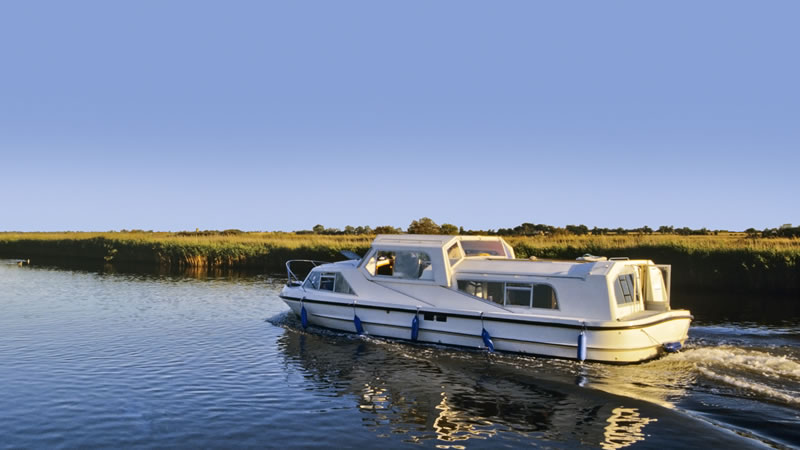
Day Boat Hire on the Norfolk Broads
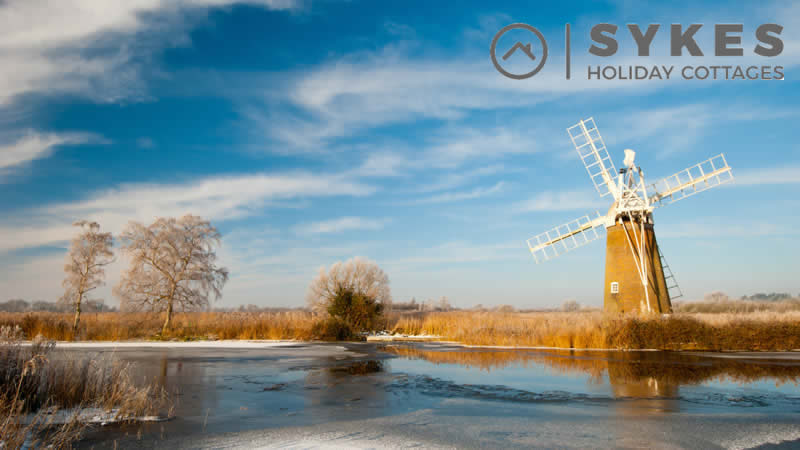
Considered the UK’s largest and finest wetland landscape, the Norfolk Broads have been a popular destination to hire boats for many decades. These waterways offer open spaces, spectacular scenery, peace and tranquillity and are full to the brim with stunning Norfolk wildlife.

The Norfolk Wildlife Trust - Wildlife Conservation in Norfolk
The Norfolk Wildlife Trust is the oldest Wildlife Trust in the country and aims to provide hands-on, learning experiences to develop knowledge, understanding and enjoyment of the natural world. 400 acres of marshland at Cley, on the north Norfolk coast, was purchased in 1926 to be held ‘in perpetuity as a bird breeding sanctuary’. This has provided a blueprint for nature conservation which has since been replicated the length and breadth of the UK.

The Marsh Harrier is a Norfolk Success Story
The marsh harrier is the largest of the harriers and is recognisable by its long tail and light flight with wings held in a shallow ’V’ formation. Females are larger than the males and have distinctive golden-yellow crowns and throat and chocolate-brown feathers. Males are lighter in colour and have a brown back, pale neck and head, gingery belly and long grey wings with black tips. In recent years the marsh harrier population has increased, and in Norfolk, it is not unusual to see this beautiful bird in flight.

Spotting the elusive Bittern in Norfolk
The bittern is one of the rarest breeding birds in the UK, it is very well camouflaged and spends all year round in Norfolk, making its home in reedbeds on the Norfolk Broads. The male has a very distinctive booming call, that it uses to attract a mate, and this can be heard up to 2km away between March and June.

See the Swallowtail Butterfly in Norfolk
The Swallowtail Butterfly, Papilio Machaon Britannicus is a large, strong and colourful butterfly that forms part of the Papilionidae family. The largest native UK butterfly, with a wingspan of up to 9cm, it is also one of the rarest. The Swallowtail Butterfly has very distinctive yellow and black markings and if you are lucky enough to spot one in flight, it’s a beautiful sight to behold.
Useful links

http://www.visitthebroads.co.uk/
Broads National Park, The official visitor website for the Norfolk and Suffolk Broads

http://www.broads-authority.gov.uk/
The Broads National Park with its scenic waterways, rare wildlife and rich history is looked after by The Broads Authority, keeping it special for visitors and its community